전체 공개 ・ 07.03
2026.07.02 (Thu)
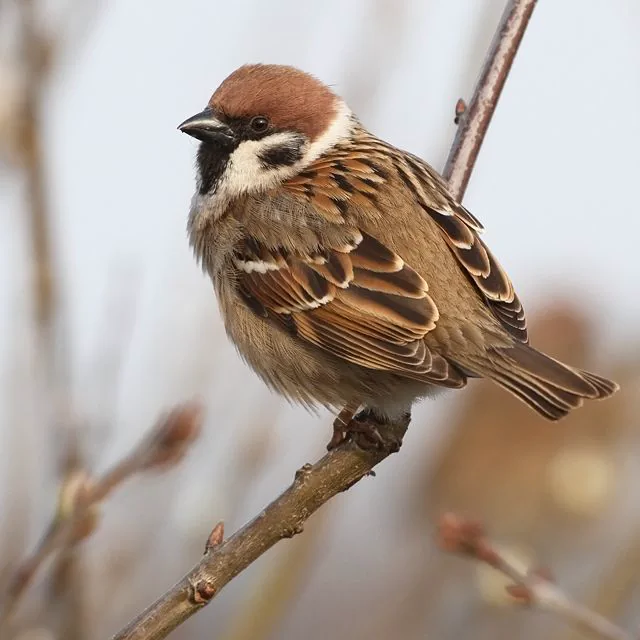
look what tiny bird i found today...🥹👉👈 today's bird is the eurasian tree sparrow!! the adult's crown and nape are rich chestnut, and there is a kidney-shaped black ear patch on each pure white cheek ; the chin, throat, and the area between the bill and throat are black. the upperparts are light brown, streaked with black, and the brown wings have two distinct narrow white bars. the legs are pale brown, and the bill is lead-blue in summer, becoming almost black in winter. this sparrow is distinctive within its genus because there are no plumage differences between the sexes. the tree sparrow's natural breeding range comprises most of temperate europe and asia south of about latitude 68°N (north of this the summers are too cold, with july average temperatures below 12 °C) and through southeast asia to java and bali. it formerly bred in the faroes, malta and gozo. in south asia it is found mainly in the temperate zone. it is sedentary over most of its extensive range, but northernmost breeding populations migrate south for the winter, and small numbers leave southern europe for north africa and the middle east. the tree sparrow has been introduced outside its native range but has not always become established, possibly due to competition with the house sparrow. it was introduced successfully to sardinia, eastern I indonesia, the philippines and micronesia, but introductions to new zealand and bermuda did not take root. the tree sparrow reaches breeding maturity within a year of hatching, and typically builds its nest in a cavity in an old tree or rock face. some nests are not situated in holes per se, but are built among roots of overhanging gorse or similar bushes. roof cavities in houses may also be used. the tree sparrow is a bird that predominantly eats seeds and grains. it feeds on the ground in flocks, often alongside house sparrows, finches, or buntings. its diet includes weed seeds, such as chickweeds and goosefoot, spilled grain, and it may also visit feeding stations, especially for peanuts. adults use a variety of wetlands when foraging for invertebrate prey to feed their young.
07.03
he's so tiny and cutie 😿🤏🏻🤏🏻🤏🏻...
답글 1개 더 보기

 _em.iliaa