전체 공개 ・ 05.02
2026.05.01 (Fri)
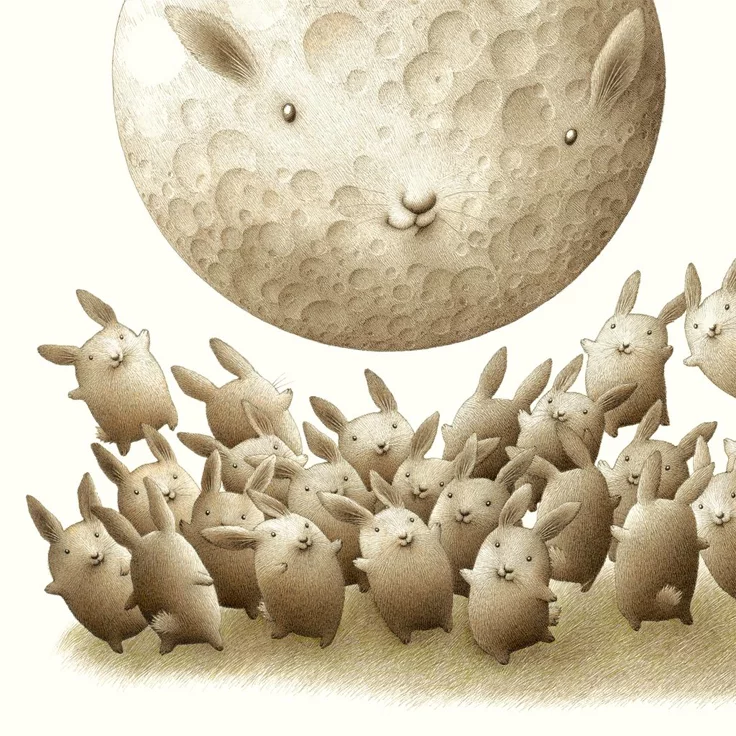
I'm an art historian and I have many examples of the work of painters and sculptors, which I love very much. I thought that if I analyzed each painting in detail in each individual post, it would take too much time. but I would just like to show my fav works :p 0. the cover illustration is taken from the children's book "Rabbit Dreams" by author and illustrator Peter McCarthy. 1. deer in the forest (1956) by the prominent Croatian naïve artist Ivan Generalić. Naïve Art (also known as Primitivism), characterized by simple, unrefined techniques and rich, folk-inspired narratives. 2. Ode to Sleep (2025) by japanese artist Tokuhiro Kawai. Tokuhiro Kawai specializes in surreal tableaux that fuse classical European painting techniques, such as oil tempera and gold leaf, with Japanese iconography and fantasy themes. the painting features a figure surrounded by a "clowder of cats", many of which are adorned with golden halos reminiscent of religious art. this artwork is part of a series titled "Altarpiece of Cat Adoration". It portrays cats not merely as pets but elevates them to "guardian spirits," "sacred miracles," and "mediators". 3. Sketch of "Seraphim" (1885-1888) by Viktor Vasnetsov for the right part of the altar apse painting of St. Vladimir's Cathedral in Kiev 4. annunciation altarpiece by Andrea della Robbia (Archangel Gabriel kneeling in prayer 5. The Hallucinogenic Toréador (1968-1970) in the bottom right, dalí himself is depicted at the age of six, with flies flying toward him. above, as if dominating the painting, is the head of gala dalí. multiple images of the venus de milo gradually turn, changing sex. the face of the bullfighter himself can be found in the figure of the second venus from the right: her breast forms his nose, and her head forms his eye. the shadow on venus’s abdomen creates the image of the bullfighter’s mouth. below, a green shadow represents his tie, while venus’s robe becomes his shirt. to the left, one can make out the bullfighter’s jacket against a backdrop of rocks, in which the head of a dying bull is hidden. in the lower right corner, watching all this spectacle, is a little boy dressed in a sailor suit, who is said to represent a young dalí. 6. le repas du lion (1907) by Henri Rousseau. Rousseau drew inspiration for his detailed foliage from studies he made at the botanical gardens (jardin des plantes) in Paris, but he invented the composition and ignored actual scales, creating a dreamlike environment.
05.02
thank you for feeding with the most amazing art as always holyspirit 🙏 always wanted to study Vasnetsov because of how he handles proportions that are close to realism yet are subtly stylised...
답글

 holyspirit