전체 공개 ・ 05.23
2026.05.23 (Sat)
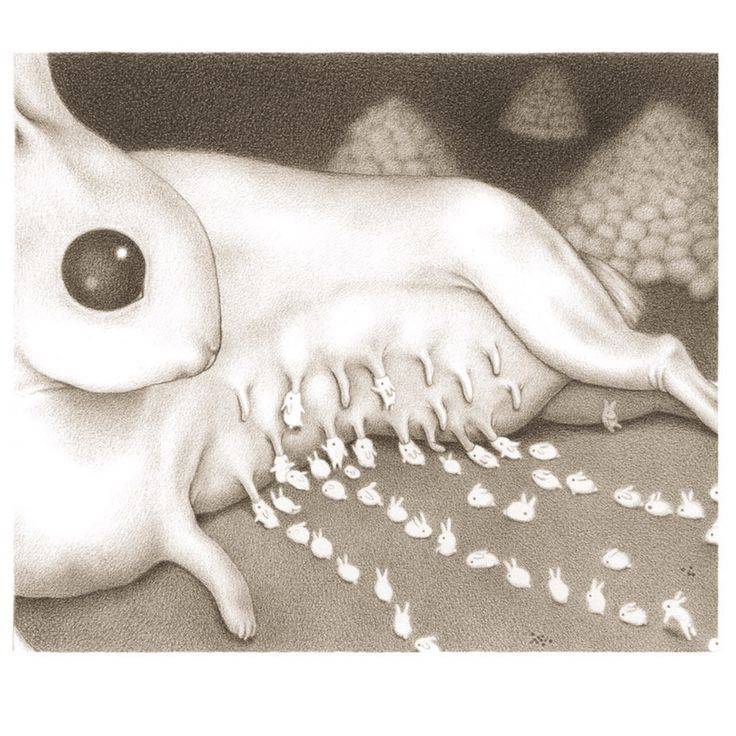
salut everyone, it's me again !! your art historian and artist friend, showing you my favorite paintings :з hope you like them. 0. on the cover - a piece by renée french, a famous american comic artist, illustrator, painter, and animator. super interesting and cute work, honnêtement. 1. "eat, sleep, play". this painting is part of the series "altar piece for cat worship" (2025) by contemporary japanese surrealist tokuhiro kawai, who i've mentioned before. i'm obsessed with his renaissance technique. kawai creates these super detailed surrealist pieces using classical western techniques - yk, oil tempera and gold leaf on wood panels. 2. "after you" by colete martin. the scene is described as exploring themes of divinity, illusion, and primal action. juste un chef-d'œuvre. i'm in love, guys. 🦄 3. an illustration by tokyo-based artist kosuke ajiro. this postcard was released as a new year's greeting for 2018. what makes me melt is that under the creature's many paws, there are symbols that look like runes. trop mignon. 4. "circe" by british artist wright barker (around 1889). i won't stop saying how much i love greek mythology. and especially this particular heroine - she just does something to me. next post i'll break down the symbolism in this painting, i adore it 💋 5. an image of a rare russian orthodox icon called "the all-seeing eye of god". in the center (the pupil), you see christ emmanuel as a teenager, blessing with his right hand and holding a scroll in his left. christ is surrounded by a big golden circular face, where you can clearly see a nose, lips, and a pair of eyes staring right at you. at the top of the icon, in church slavonic, it says "all-seeing eye of god". this isn't a literal picture of god - c'est une métaphore complexe. it's about divine omniscience and omnipresence. a reminder that god sees everything in the universe. this icon became super popular in russia during the 18th–19th centuries. 6. this painting is "the wounded angel" (haavoittunut enkeli), painted in 1903 by famous finnish symbolist hugo simberg. in the background, there's an actual place - eläintarha park and töölönlahti bay in helsinki. back in simberg's day, this park was a popular spot for the working class to hang out. the path the boys are walking on led to charities and medical institutions. basically, they're carrying the wounded angel toward either a school for blind girls or a home for cripples. simberg painted this right after surviving a serious case of meningitis that almost killed him. a lot of historians see the angel's fragile figure as a reflection of the artist's own vulnerability during his long recovery. following the rules of symbolism, simberg refused to explain the painting's meaning. at its first exhibition, he even left the title line blank so everyone could feel the scene for themselves. here's how i read it: the angel's white robe, bloody wings, and blindfold symbolize lost innocence, absolute vulnerability, or a broken earthly spirit. in its right hand, the angel holds a small bouquet of snowdrops. since these flowers are the first to push through the snow, they've always been a symbol of hope and healing. the two teenagers are dressed in dark working-class clothes and seem weighed down by their burden. the boy on the left trudges forward, doing his duty. the boy on the right sharply turns around and stares right at you - his gaze full of reproach, pain, and defiance. it forces us to face human suffering. voilà.
 holyspirit