전체 공개 ・ 06.30
2026.06.29 (Mon)
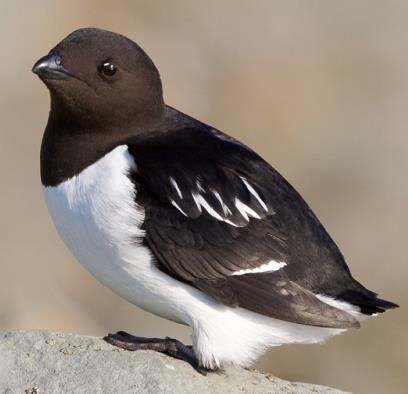
OMG LOOK WHAT CUTIE I FOUND FOR TODAY'S BIRD🥹🥹🥹 today's bird is the little auk! measuring 19 to 21 centimeters in length and with a wingspan of 34 to 38 centimeters, it is about half the size of the atlantic puffin. the adult little auk is black on its head, nape, back, and wings, while its breast is white. the bill is very short and stubby. the tail is small, rounded, and black. the lower head and the front of the neck turn white in winter. there are few differences between males and females, apart from bill length. males are, however, on average slightly heavier than females. the little auk nests in greenland, the baffin sea, iceland, novaya zemlya, jan mayen island, bear island, svalbard, and the franz josef land archipelago, between 68th and 82nd degrees north latitude. the largest colonies are found in the qaanaaq region of northwestern greenland and in svalbard. like other alcids, the little auk searches for food by swimming underwater. they feed mainly on crustaceans—especially copepods—but also on other small invertebrates and small fish. they gather in large colonies before leaving their nesting sites to forage in the water, and do the same on their return. the little auk, like many seabirds, is a central place forager : it forages far from the colony and then brings its food back to the nest. during the rearing of their young, both parents adopt a dual foraging strategy. they alternate between long-distance trips, primarily for their own maintenance, and more frequent, shorter trips dedicated to finding food for their chick. Little auks are often victims of marine pollution when oil tankers suffer damage. overfishing, on the other hand, seems to affect them less because their diet consists mainly of crustaceans. a study showed that rising arctic ocean temperatures have an impact on little auk chicks. researchers measured that their maximum body mass and fledging mass were lower in years when water temperatures were higher than normal.
 _em.iliaa