전체 공개 ・ 04.03
2026.04.03 (Fri)
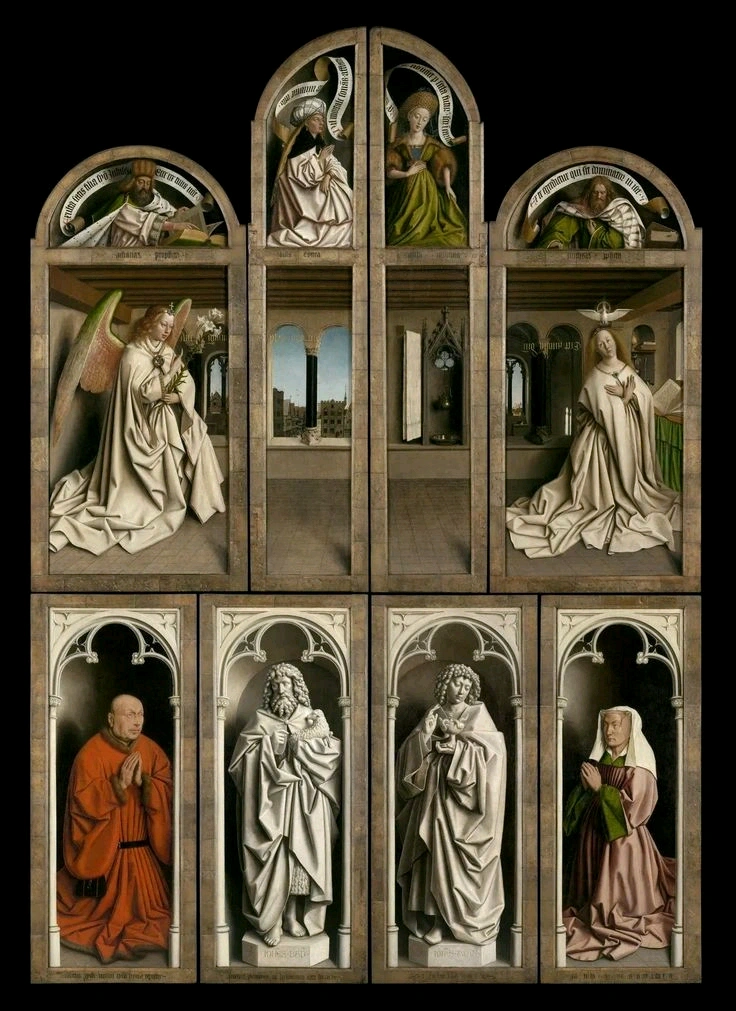
or Worship of the Mystic Lamb (Het altaarstuk De aanbidding van het Lam Gods) - a fifteenth-century polyptych in the Catholic Cathedral of St. Bavo in Ghent, Belgium. the authors of the work are considered to be the brothers Hubert and Jan van Eyck, artists of the Dutch school of the Northern Renaissance. the height of the altar in the central part is 3.7 meters, the width when opened is 5 meters. the altar was commissioned by Jos Veidt, a wealthy donor to the Church of St. John the Evangelist, which later became the Cathedral of St. Bavo (1561), for his wife's private chapel. I will not say much about the composition and what is depicted on the altar, I would like to say about those technical moments in drawing that fascinate me so much in this work and why I love it so muchh. the first thing I want to note is the scene of the Annunciation. It is depicted on the outside when the altar leaves are closed. the Archangel Gabriel tells Mary that she will be the mother of Christ. the figures of the angel and Mary are on the outer edges of the panels. the Holy Spirit (dove) hovers over Mary. two adjacent scenes in the center are exclusively genre scenes from everyday life. next to the Virgin Mary, in a recessed niche, there is a silver tray, a small hanging jug and a linen towel hanging from the counter. these items in iconography (of those centuries) mean the purity of the Mother of God. i absolutely adore the way the fabric is draped in this piece. and the colors chosen for the Archangel Gabriel's wings are stunning: I'm particularly fond of the green on the outside and the pink on the inside. it creates such a beautiful contrast. and also, the relatively large size of the panels allowed Jan van Eyck to demonstrate his talent as a master of light: directional light, saturation, the softest scale of illumination in shadow gradation, the construction of space through light and shadow, symphonies of reflection and refraction, vibrant surface textures, I think that all of this is a reflection of real and divine light, a perfect blend of divine enlightenment with the created world and all of it is described in paint. Van Eyck creates a world within the painting as substantial and real as the world outside this painting. and this is for a reason!! because, yk, Jan van Eyck was the first to paint with oil paints, and not with tempera. it was after his work that oil technology spread throughout Europe. I love it sm😭
 holyspirit