ayiya's
점수 분석
4.8~5

Obsession
영화 / TV
ok wow this is so good and terrifying that it left me speechless once the credit scene appears. i was raging silently the whole time because WHY IS SOOOO FUCKING AWFUL oh my God he really is fucking sick in the head and everyone who thinks that Nikki is the one who's obsessed with him and not the other way around is just as fucking sick and need to be demolished. he's a fucking coward that's not even a mother would love, how can you blame HER for being obsessed with you when you're the one who fucking wish it? he's the one who's ruining her life, her future, and make her ruin other people's life but he's the one who acts like the victim oh my Goddd. and how dare he says that he still thinks that he is psychotic lunatic girl with mental ilness, spreading that rumour about her when he CLEARLY knows that all her actions is caused by the stupid little sick fuck wish that he made. even after she's asking him to be saved, after she shows how much it ruins her he still think that there's nothing wrong with it and even blame her for not loving him, "what so bad about loving me" EEEVERYTHING!! there's no wonder she friendzoned you and not even laying her eyes once at you, you sick little coward boy. Obsession proves once again that men are trash and forever they will be. what makes it more terrifying is, i know some men actually do the things that Nikki does, even without a freaking One Wish Willow, they ruin someone's life just because they don't love them back. i genuinely think it's not the One Wish Willow fault, nor it's hers, him and his selfishness is the only one to blame. i mean, if i were given the One Wish Willow thing, my only wish will either be lengsernya prabowo-gibran dan seluruh kroni-kroninya (i think all Indonesians will wish for the same thing) or to be able to travel around the world. if your brain is not troubled like Bear's nothing bad will happen and someone's life wouldn't be ruined. now about the technique, i think the acting, the ambience and everything i can't really name off because i actually don't know anything about film shooting technique is absolutely freaking gooddd omg my eyes and ears are pleased. Curry Barker deserves lots and lots of appreciation, and ofc my girl Inde Navarette deserves to blow the hell up afer this, she fr deserves an award for this movie. one thing that i hate about this movie is how he dies sooo peacefully and painlessly ON HER LAPPP, he deserves to be ran over by a truck or any death scene that appears in Final Destination.
6
0
8
0
1
0.7≤
0
~1.2
0
~1.7
0
~2.2
0
~2.7
1
~3.2
3
~3.7
5
~4.2
6
~4.7
23
≤4.8
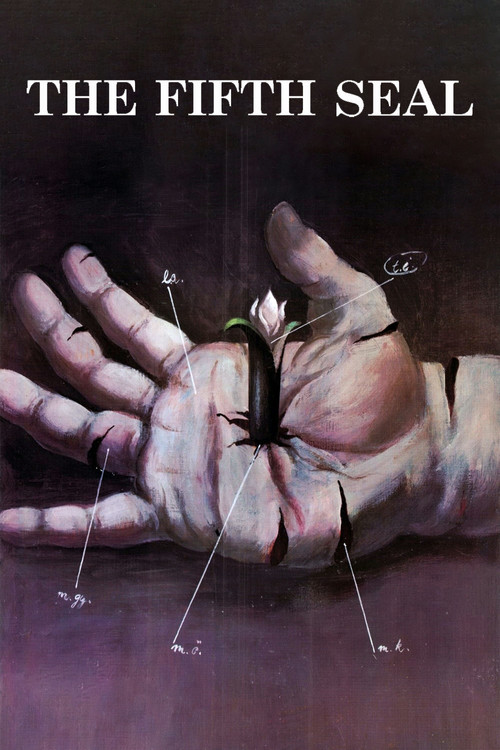
The Fifth Seal is a film that portrays the moral dilemmas existing within every human being, revealing the parts of ourselves we often try to deny just so we can continue seeing ourselves as respectable people with a good moral conscience. The film revolves around a single question that, at first glance, seems simple enough to answer without much thought, at least if we treat it as nothing more than a hypothetical: "Would you rather be reincarnated as a vicious, monstrous tyrant, or as a tortured slave who must sacrifice everything they have, but in return possess a clear moral conscience? Well, if we see it as merely a hypothetical question, the answer seems obvious. But the moment we stop treating it as a mere hypothetical and begin weighing it against our own morals and conscience, it gets more and more complicated. I know this because I couldn't bring myself to give a definite answer either. The more I thought about it, the more it made me question my own morality and whether I'm really as decent a human being as I had always believed myself to be. And I don't want to be the only one who feels that way, so I hope you'll be just as lost as I am when you read this "review" :P You see, as human beings, we've always been taught to distinguish between what's good and what's bad, what's evil and what isn't. Those teachings shape the way we think, leading us to avoid anything that goes against the values we've grown up with. We come to believe certain things are inherently good simply because we've always been taught to see them that way. Long before we're able to understand those values for ourselves, we're already taught to accept them as the truth. Many of us end up doing what's considered "right" simply because we've been told it is before we ever get the chance to ask why it's right in the first place, or why one choice is considered more moral than another. We were never prepared for the possibility that, as we grow older and begin questioning those beliefs, everything that was always taught to us starts to feel uncertain. The things we once accepted without a second thought suddenly don't make as much sense anymore, and we're left wondering what we're actually supposed to believe. Take religion, for example. Many of us, especially those raised in religious families, were taught to be kind and avoid doing bad things because God wouldn't want us to do otherwise. But we weren't always taught why those actions were good beyond that. We were expected to accept the answer without questioning it. So when someone begins to doubt their faith, it's not uncommon for them to question the moral values they built on top of it as well. If morality was something we were only taught to follow rather than something we truly understood, then once the foundation starts to crumble, everything built upon it can begin to fall apart too. The things we've always been taught also shape the way we behave. They shape our idea of what makes someone respectable, what makes someone worthy of being called a "good" person. Before we even get the chance to figure it out for ourselves, we're already handed a standard of morality that we're expected to follow. Because of that, we often feel the need to perform, we hide the parts of ourselves that don't fit the version we want other people to see, we become less truthful, less genuine, all for the sake of being seen as righteous. So when we're faced with a question like this, just like the four men in the film, most of us will instinctively choose the latter. Not because we've truly confronted the question, but because we've already been taught which answer is supposed to be the "right" one. We might even convince ourselves that it is our honest answer, simply because admitting otherwise would force us to question the image of ourselves that we've spent our whole lives trying to protect. The men constantly justify their choice by arguing that the one who is treated as a slave, someone seen as far beneath everyone else, at least gets to keep a clear conscience. They don't hurt anyone. They don't ruin other people's lives. No matter how much they suffer, they can still hold on to the belief that they remained morally good. To them, that alone is enough to make the choice obvious. A clear conscience is worth more than power, comfort, or even freedom. Yet the more they try to explain it, the more it becomes clear that none of them is completely certain. Their reasons begin to sound less like convictions and more like attempts to reassure themselves that they're making the "right" choice. And as each one of them goes back home and has some time alone, or with the people who most likely won't judge them for who they truly are, they begin to question their own answer and grow more and more uncertain. They start to realize that living in Gyugyu's shoes is anything but a convenient life. He has to give up his children to his master, watch his wife be killed, and even allow his eyes to be gouged out. When the reality of that life begins to sink in, the certainty they once had slowly starts to disappear. Some of them even begin to reveal what they truly think. Once the realization hits, they admit that perhaps it is better to be Tomóceusz Katatiki, the tyrant, if it means they don't have to suffer. Even if it requires them to be cruel, to destroy other people's lives, or to become the very embodiment of evil, they realize that a life free from suffering can be far more tempting than such an abstract concept as "conscience." They come to see that choosing Gyugyu would only make them hypocrites, and they're convinced that no sane person would willingly choose a life of such unbearable suffering. And that made me wonder: do we choose what is "right" because we truly believe it's right, or because, in one way or another, it's still the more convenient choice? And if it isn't convenient, do we simply reshape our morality until it becomes convenient for us? What if being righteous, what if being kind, truly meant suffering? What if it required us to give up everything we have? Would anyone still choose it? And if everyone had the chance to avoid suffering, would anyone willingly embrace it instead? Because, even in reality, many people like Gyugyu suffer not because they choose to, but because they have no other choice. Their circumstances never allow them one. But if they were given the choice, would they still choose the very same path? The men also keep bringing up how wrong it is to be someone like the tyrant. They keep questioning whether he'd ever feel guilty for everything he's done, and they simply can't understand how a man like that could still sleep peacefully at night. To them, it's unimaginable that someone could commit such horrific acts and remain completely at ease with themselves. But then Mr. Gyurica, the one who first raised the question, offers a different perspective. He argues that the tyrant doesn't feel guilty because he doesn't even realize that what he's doing is wrong. He has never known guilt to begin with. From his point of view, his actions aren't evil at all, they're simply the way the world works. It made me come up with another hypothetical question (please forgive me and my weirdly-wired brain, I guess...) 1. if we lived in a completely different world where everything the tyrant does—killing people, destroying lives, exploiting others—was considered right and normal, where no one would ever call those actions evil and no one would condemn us for doing them, would we still choose to avoid them? 2. If no one ever taught us what guilt was, if no one ever told us that those actions were wrong, would we still develop that same sense of morality on our own? Or would we become just like Tomóceusz Katatiki, believing we had done nothing wrong simply because that was the only reality we had ever known? Well, you see, we often think of morality as something deeply personal, something that comes from within us. But how much of our conscience is truly our own, and how much of it is shaped by the world around us? (Please tell me that it does makes any sense). ANYWAY... I think that's enough of me spiraling over a hypothetical question and having an existential crisis because of a two-hour Hungarian film LOL. I still don't have an answer, and honestly, I don't think I ever will, in fact. Now, if we're talking about the film itself, I genuinely think it has some of the best writing I've ever seen. Rather than spoon-feeding the audience an answer, it trusts us to wrestle with the question ourselves. It doesn't tell us what to think, and instead, it forces us to think. It leaves us to confront our own beliefs, our own contradictions, and our own hypocrisy, just as I found myself doing throughout the entire film... 😅 The dialogue is easily my favorite part. Every conversation feels so carefully written that I found myself constantly pausing just to write things down. I ended up filling around 15 pages of my notebook with magnificent dialogues from the film and my own thoughts as I tried to make sense of everything. I understand very well that it might be boring to some since it only shows people spend most of the runtime simply talking, but I personally like it since it doesn't feels somewhat boring and instead incredibly tense because every word carries so much weight in it. The acting deserves just as much praise. Despite how philosophical and heavy the script is, the performances never feel artificial or like the actors are simply delivering a philosophical lecture—and I think this helps a little to make it less boring (again, for me, at least). And, as per usual, I read a bunch of Letterboxd reviews both before and after watching it. A lot of people talked about how mentally exhausting this film is, to the point that it made them want to slap themselves (literally or figuratively), and I couldn't agree more. I felt exactly the same way. By the time it ended, my brain genuinely felt drained from trying to process everything it was throwing at me. 😮💨 Dare I say, The Fifth Seal is one of the greatest films I've ever watched, and I highly encourage anyone who happens to read this review to give it a watch too!!
0
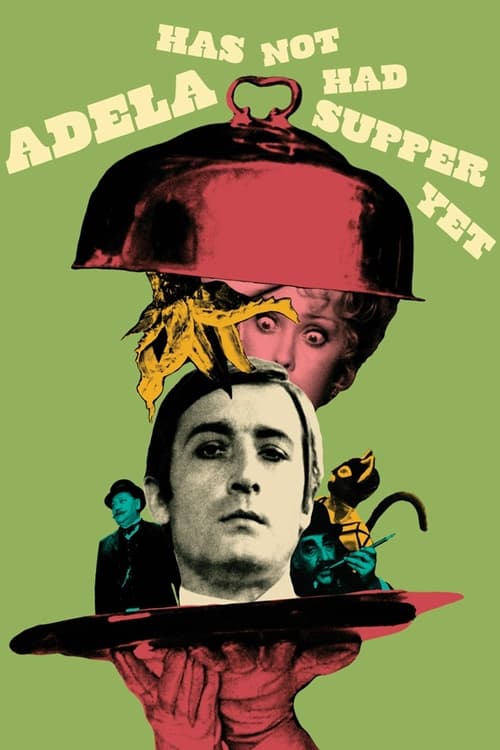
Probably one of the funniest movies I've ever seen. I genuinely never expected a detective movie to be THIS funny. The comedy feels so fresh and somehow still feels relevant despite how old this movie is. so many unexpected things happen here, from who (or should I say, what?) Adela turns out to be, to the spies who suddenly appear out of nowhere, the ridiculous wardrobe especially the one Nick Carter wears and so many dialogues that sound like they came straight out of a drugged man's mouth LOL. I genuinely NEED to know what Oldřich Lipský was on when he made this movie because WHAT EVEN IS THISSS 🤣 and I think the funniest part is how everyone in the movie seems completely unfazed by how ridiculous everything is, everyone just carries on as if all of this is perfectly normal. My favorite scene is hands down goes to "I assume my arrival has been kept strictly secret." "But of course!" A kid, out of nowhere: "THE MOST FAMOUS AMERICAN DETECTIVE'S IN PRAGUE!" "Ye know, can't keep a secret here..." I'M DEADDD HAHAHAHA. The timing of that entire scene was absolutely perfect. I genuinely think that this film is absolutely ridiculous in the best possible way. Such a must-watch!
0
Habis bikin roasted milk tea yang MENURUT GW lebih enak daripada Teazzi... sumpah ya rasa tehnya pekat banget dan berasa roastednya, susunya gak overpowering, terus gak terlalu manis juga AAA SUKA. Gw masih senyum senyum sampai sekarang (Maaf fotonya gak aesthetic).
14
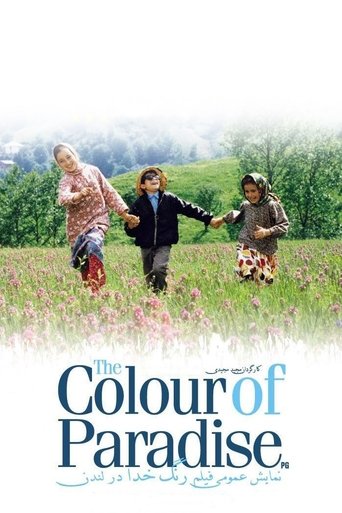
The Colour of Paradise is a breathtaking Iranian masterpiece by the remarkable Majid Majidi himself that tells us about the story of a bright and spirited blind boy named Mohammad. unlike other films with similar premise, The Color of Paradise doesn't ask us to pity Mohammad by showing the struggles that he has to go through, given the condition that he has. instead, it shows how, despite his condition, he possesses remarkable qualities that goes beyond the limit those of people without his condition even dares to imagine. Mohammad's eyes may not function the same way ours do. he might be unable to witness how the leaves rustle, how the river flows so eloquently, or how the birds that he is fond of fly from one tree to another, yet he has his own way of sensing these things, one that feels more instinctive than anything we could imagine. he touches everything his hands can reach, such as the rough, ridged edge of a rock, the crisp bits of an old leaf that falls beneath his feet, the seeds on a stalk of alfalfa, and the wrinkled hand of his dearly beloved grandma that, described in his very own words, feels soft and beautiful. his little hands reach for those objects to decipher the stories or meanings that those things are trying to tell him, something that might not be perceived in just the way a pair of eyes functions. his fingertips explore every side of the things he touches, reading them like a braille book, while his mouth recites the letters he finds there until they form a word or sentence that tingles something in his dear, precious heart. in the tear-jerking scene where Mohammad talk heartfeltly with the carpenter, he recalls what his teacher once told him, "God is not visible. He is everywhere. You can see feel Him. You can see him through your fingertips" that idea is what drives his habit of touching everything within reach, searching for the hand of God, and tells Him every secret he carries. i'm not much of a faithful believer myself, nor am i blessed with the ability to see God in the chilling sensation of the morning breeze or the sun that rises every day like other people might do, but if the said God that Mohammad is reaching for actually does exist, i believe that He has granted Mohammad some gifts as a form of apology for making him suffer from a condition that he never once asked for, one that inflicted wounds a sweet little child like him should never have had to know. Mohammad is granted with a sharp hearing that enables him to hear the sound of the swishing trees, the sound that a woodpecker or any other birds made, or the sound of the rushing river under the bridge that he crosses. other than that, he's also granted with a smart mind. the scene where he helps a fallen little bird get back to its house high up in the tree shows just how smart and brave this little boy is. he bravely climbs the tree and carefully listens to which direction the chirping sound of the bird is coming from, while his hands try to reach for the bird's nest to find where to put the little bird, until he finally reaches the right one. i've truly lost count on how much tissues i've used to wipe my tears while watching this, especially in the scene where Mohammad said that nobody ever loves him, not even his grandma or father, because he's blind. my heart bleeds with him, not even my own heart knows how much i wish i can pull him to my embrace and tells him just how much he's loved to prove him wrong. just as many tears i've shed, my anger also built up so many times whenever Mohammad's father pops up in my screen. i really despise him like how despise my own father, truly. i already hold grudges for him from the very start, how can he has the heart to abandon his own child, a sweet child like Mohammad because he has no money to raise him, while at the same time still has the will to remarry, which of course will costs him just as much or even more? he even dares to think that having to take care of a blind child loke Mohammad as a punishment, as an unfortunate fate written for him by the creator of life himself... can someone please throw a rock at this man's head? i noticed the same pattern regarding Chunhe’s mom in 'Big World' as well. technically their situations are almost identical. both have to take care of a child with special needs, Chunhe has cerebral palsy and Mohammad lacks functional vision, they do all these with little to no help from other people or family members. both mohammad’s dad and chunhe’s mom see this as a tragic fate that should never have happened to them. both also blame their children for having such conditions, dare i say that is total bullshit. however, if we try to see it from their perspectives, we can all agree that raising a child with special needs is indeed not an easy thing to do. an article from The Gottman Institute regarding "Raising Exceptional Families with Special Needs Children" mentions that raising children with special needs is a journey full of questions and self-doubt, and it certainly comes with an immense amount of stress as a consequence of the restless body and mind that must work 24/7. that is perhaps why they eventually break under the pressure and resort to blame as a maladaptive coping mechanism. when a parent feels trapped in a cycle of relentless exhaustion they often lose sight of the child’s humanity. they instead fixate on the burden the condition places on their own lives. by viewing their child as the source of their suffering rather than a person in need of support these parents externalize their internal pain. it is a defense mechanism. admitting that their frustration is misplaced or that they simply lack the necessary emotional or financial resources to cope would require an admission of failure. but, still, i don't think it's the right move to say that about your children, i just don't think all those reason is enough to justify all his reckless actions. if we're to talk about the cinematography, there certainly is no need to doubt Majid Majidi's talent in delivering an exceptional scenery that pleases our eyes while also crying a river at the same time. as what being said as the title, i think The Colour of Paradise is pointing to all the variations of colours that can be seen especially in the scenes that take place in Mohammad's hometown; the green and yellow gradation of the wheat, the orange colour of the old leaves, and the dark green colour of the scattered trees that can be seen everywhere around the village. outside the visible objects, that Mohammad can't see, i think the colours can also be 'seen' through the things that Mohammad hears; the laughter of his sisters that maybe sparks a bright yellow colour, the soft and loving voice of his grandma which likely manifests as a warm and comforting gold. he interprets the world through textures and vibrations transforming the rustic village into a vibrant tapestry that exists only for him. Majidi uses these auditory cues to bridge the gap between Mohammad's inner world and the external landscape. those artistic choice forces like the sound of the river or the rustling leaves forces the audience to stop relying on their own sight and start listening with the same intensity that he does. it's almost as if it suggests that paradise is not a place defined only by visual beauty but also a state of being where one can find harmony in the raw and unfiltered sounds of nature. regarding the acting i think all the actors do an excellent job especially the talented young actor mohsen ramezani who plays mohammad. his acting is so natural that it makes me feel like i am watching a documentary of someone’s real life instead of a movie. some of the reviews that i stumbled upon on letterboxd said that ramezani was not acting in the scene where he talked to the carpenter, he cried real tears there. oh my sweet child... to sum it all up, i'd surely say it will 100% worth your time if you dares to watch it. it's also easy to find since you can find it for free on YouTube!
0
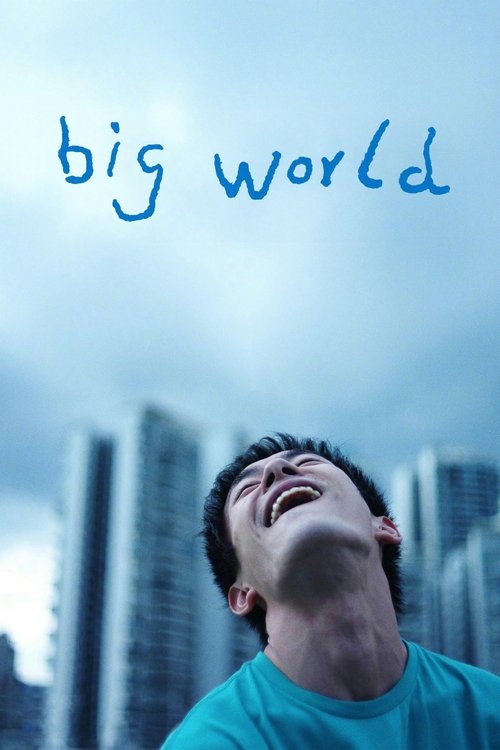
I'm not a person with cerebral palsy or any disabilities, nor have I met someone with one, but this movie opened my eyes to what they might go through in their everyday lives. They should not face the mockery, the way people belittle them and say that they're worth nothing, that they can't do any good for themselves or those around them without giving them even a single chance to try just because they're slightly different than us. It breaks my heart so much the way people always mock him and make him feel that being born that way is the punishment that he should accept, when he didn't even ask to be born that way once (according to Chunhe's dialog from the movie). I despise his mother so much, how can you even say such cruel things to your own son? But then, if I try to look from her perspective, I also pity her just as much. I know that it must've been uneasy to raise a child with special needs and still have to go to work all day long, she must've been very tired too. But I still can't understand why she puts the blame on Chunhe when he didn't even do anything wrong at all. I think the world really needs to be kinder to everyone, give everyone the same chance to try to be the version of themselves that they strive to be. Believing in them, their dreams, and all the passions that they have so that they will believe in themselves as well, that they're capable of doing many things, is a really important thing to do. To dream is every single living person's right, and no one's right deserves to be denied just because of the conditions that they have. And just as being allowed to have dreams, being seen is also an important thing. I think everyone deserves to be seen just as much as every other human being in this world. Chunhe and Grandma are the proof that believing in someone's dream really is important; Chunhe wouldn't be able to go to university, play the drums, and work in the cafe if his grandma didn't trust him. Of all the scenes here, the scene where Chunhe tried to choke himself with candies, the scene where he asked his Grandma, "Does my sister want to have a brother like me?", and literally every single heartfelt moment between Chunhe and his Grandma makes me teared up so much. Oh my dearest one... I really can't imagine how their life will be without each other. And lastly, I genuinely think that Jackson Yee is such an amazing actor. He nailed it.
0
this movie teaches us that we'll never know how much the things, even the small ones, that we do to someone means to them. sometimes even the small things that we forget in one second after we did it can be the reason why someone stays alive. as stupid as it sounds, sometimes the kind thing that someone said to us even as a lie can make us think that maybe life isn't really that bad after all, that even after all the bad things that happened, life is worth living and fighting for. because as what Aiko said, "Sometimes, all we need is someone to look us in the eye and remind us we exist" even we knew very well that they don't actually mean it.
0
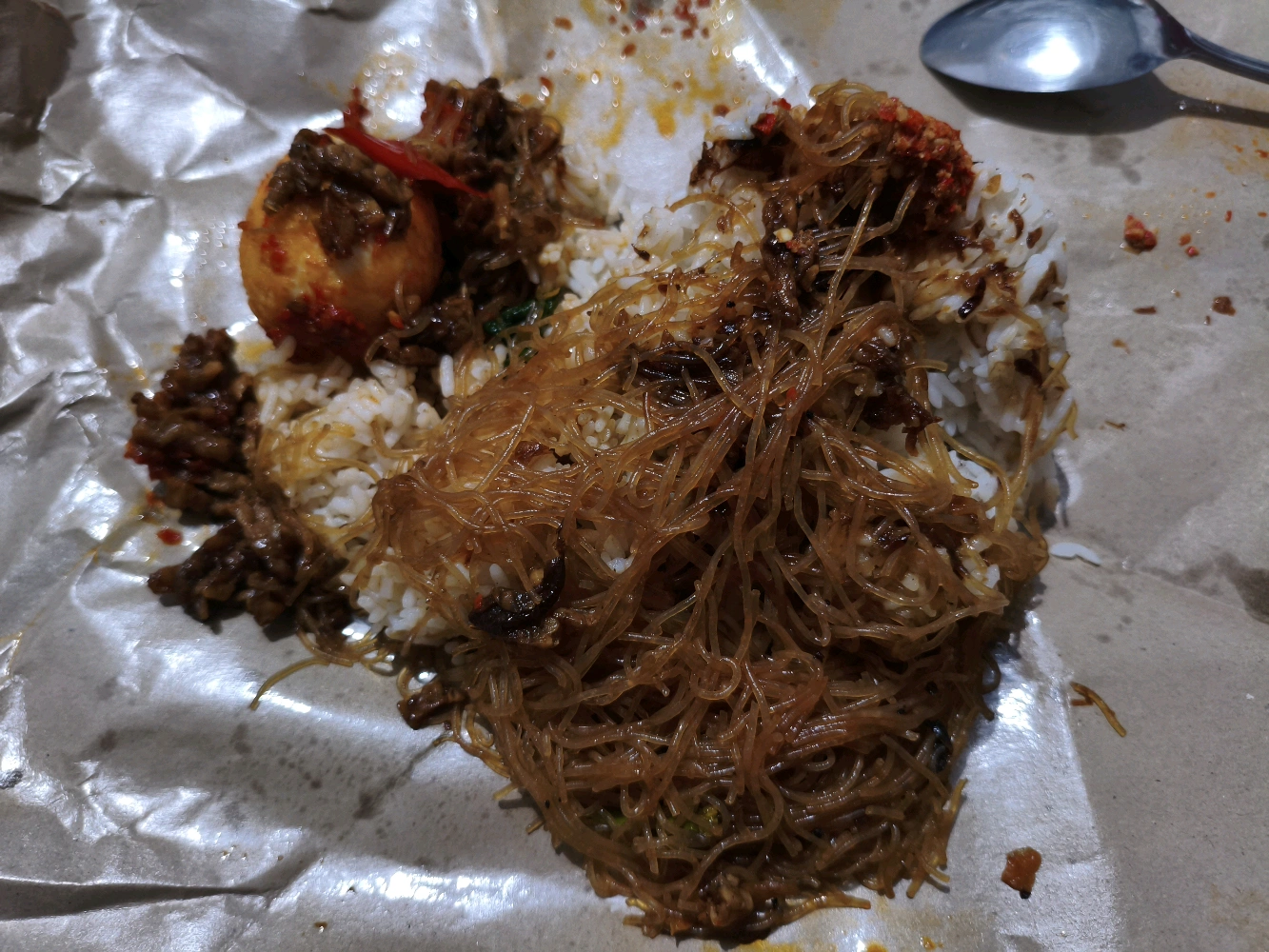
FINALLYYY an og Nasi Uduk and not the bland and weird-tasted ones like what they all sell in nangor
0
oh my God... i cried a lot watching this, i really cant imagine being neither of them without tears running down my cheeks. imagine being told about when your mom will die by your child in the future, and at the same time being able to play with the younger self of your mom; a happier, more cheerful, and less "sad" version of her. i teared up so bad at the ending, Nelly is finally able to say a more proper goodbye to her Grandma :( as someone who loves her Grandma's cooking a lot, the scene where Nelly eats her past grandma's self cooking (?) give me an indescribable feel of warmth. i really can't and don't want to imagine being in a world where i can't eat my grandma's cooking anymore... is it too much to ask if i want my grandma and mom lives forever? i hope my present or past version of my mom can tell me that i don't invent her sadness like how i always thought i did.
0
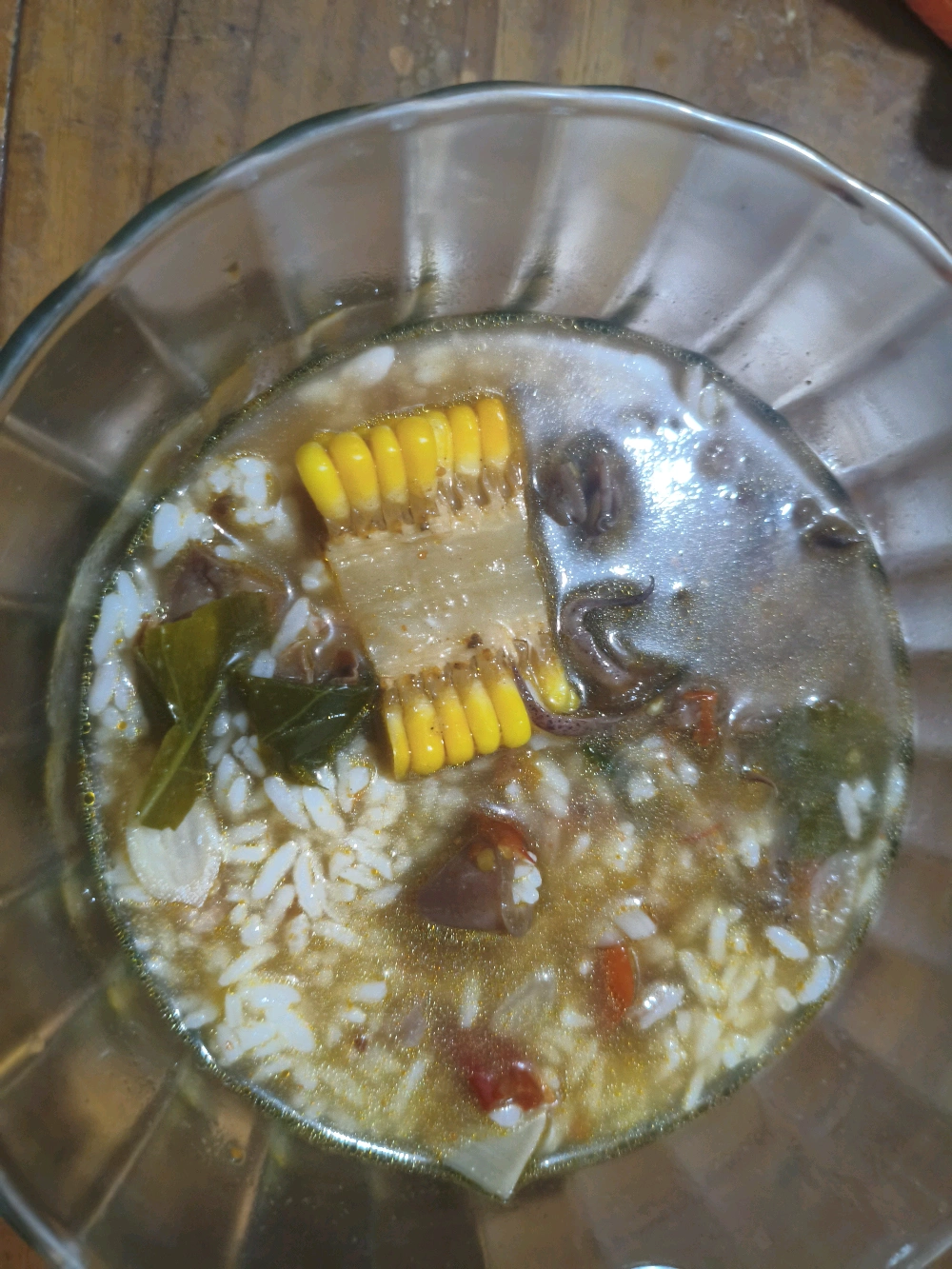
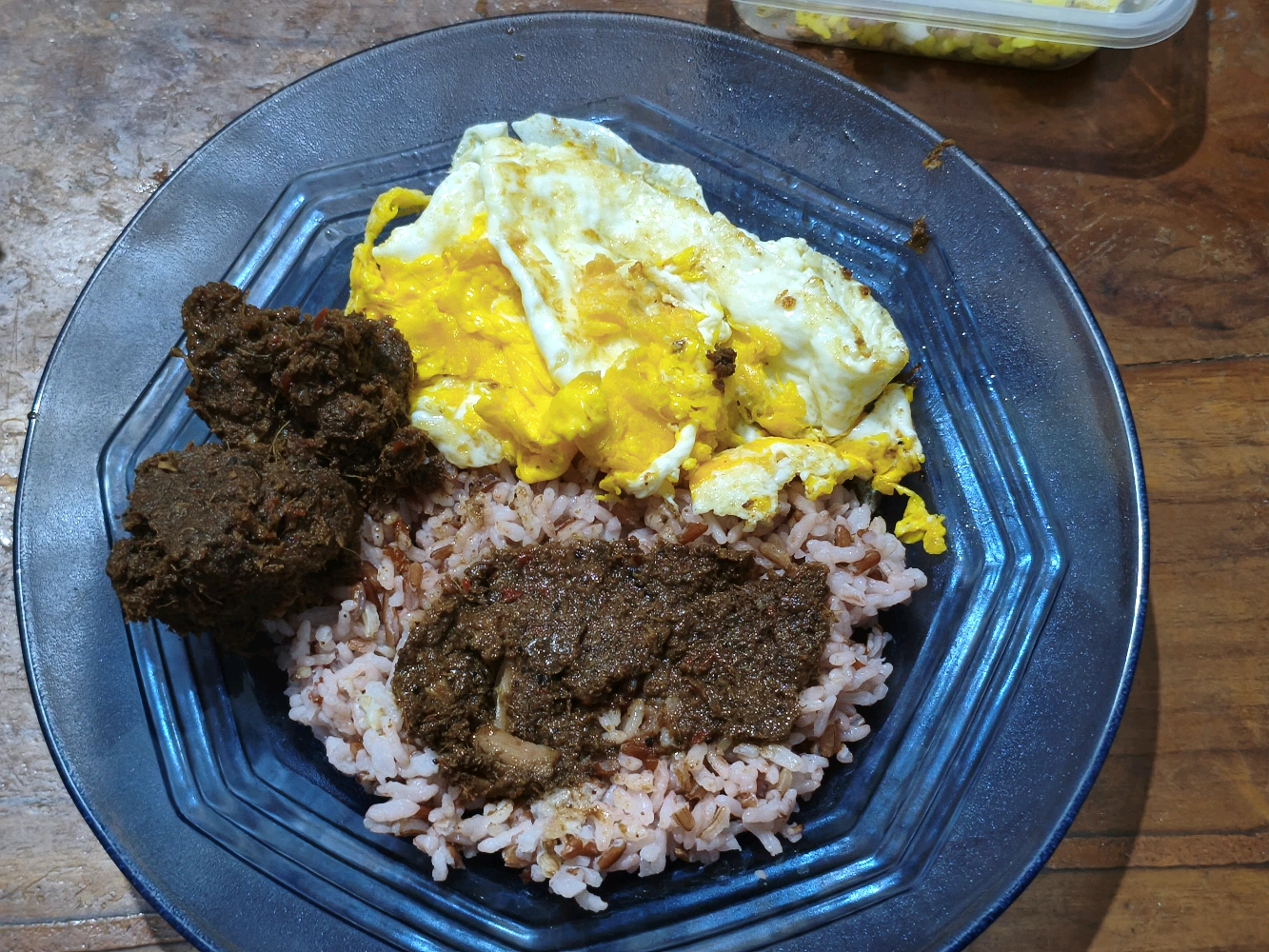
Hari ini finallyyy makan sayur asem, sama oseng cumi juga. Sososo yummy
0
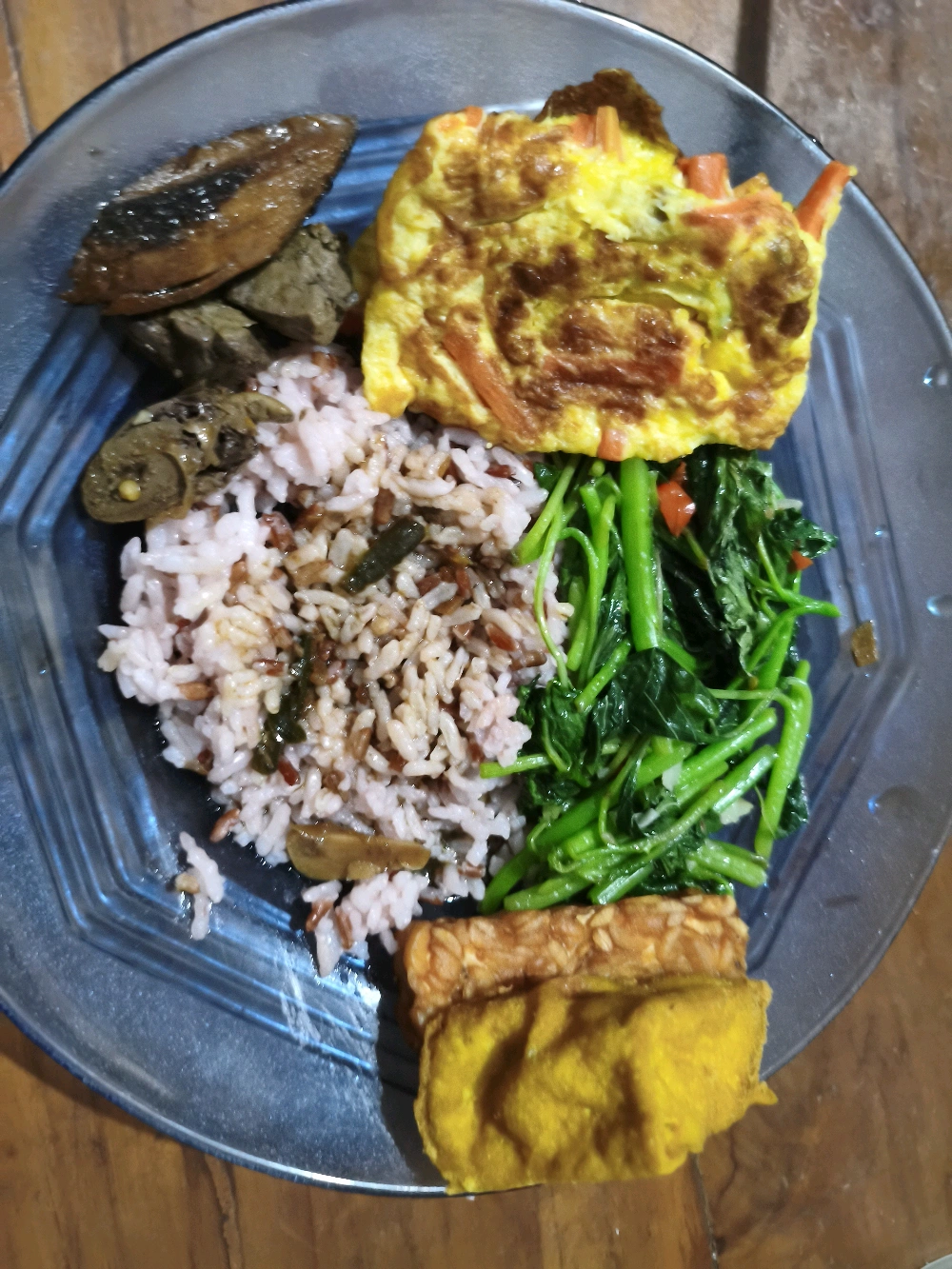
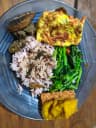
Hari ini menunya tumis bayam, sedikit oseng ati ampela sama tongkol sisa kemarin, tahu tempe, sama telur dadar pake sayuran. Yum yumm
5
Hari ini akhirnya makan makanan rumah lagi 🤤 Walaupun bukan yang di wishlistku karena hari ini belum ke rumah Mbah, tapi aku tetep saurr happy
9
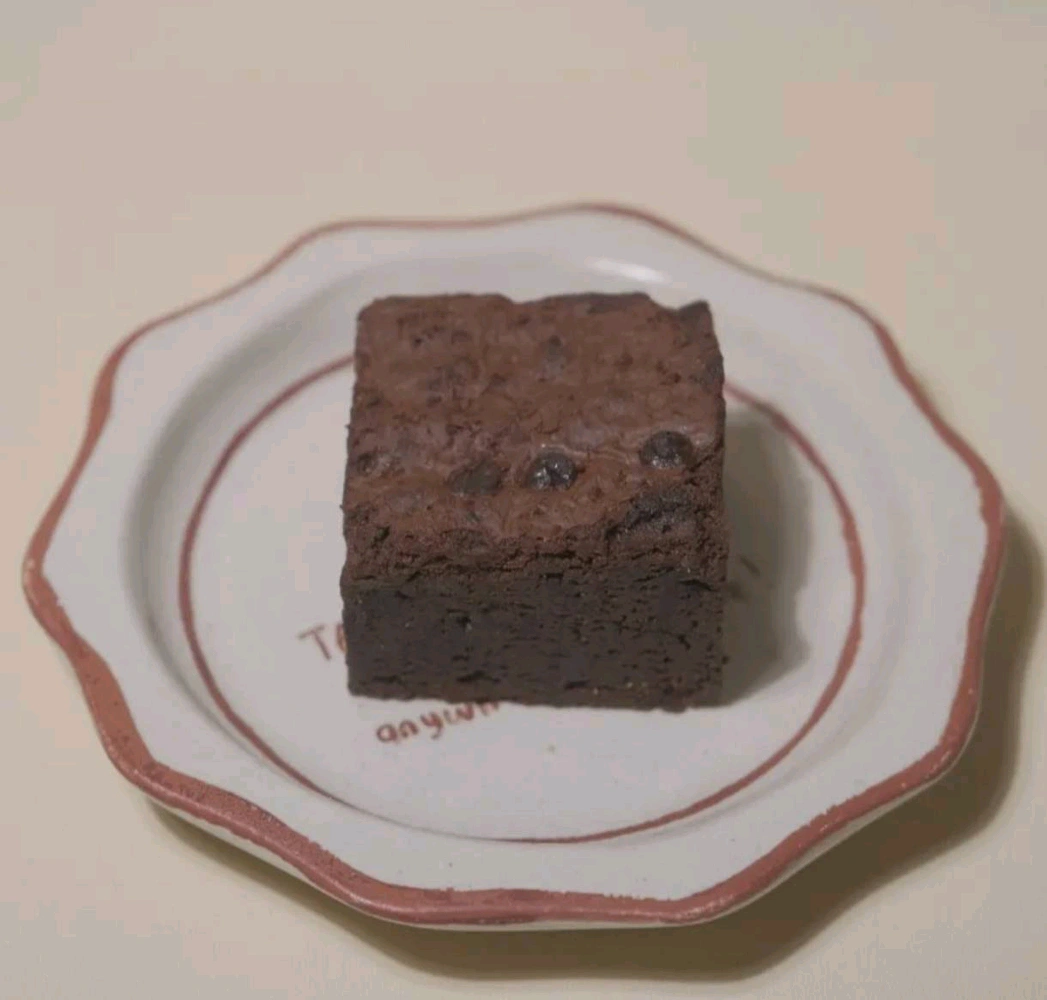
I've never been to heaven and I'm not sure if I'll go to heaven either but if you ask me to imagine what kind of food that they have there, this brownie will be my answer. ISTG this is the best brownie that I've ever eaten in my 20 years of life (i'm NOT joking), my friend said that they're using callebaut and ig that's enough to describe all these magnificantly awesome taste in my mouth. it doesn't taste too sweet yet not too bitter either, the chocolate is at the perfect quantity and omggg it's just too good idk how to describe it. if you like a deep (?) chocolate kind of taste, you'll love this brownie. the only - that it has is the price... i mean, 30k rupiah for just a single brownie, in this economy? then again, if we remember once again that they use callebaut which costs around half a million or more for just 1 kg, well, i can't really complain much about the price.
0
0
Mungkin orang-orang di Indonesia, entah itu di desa maupun kota, memang tidak secara harfiah menggunakan dolar sebagai alat transaksi. Akan tetapi, kenaikan dolar tersebut bertansformasi menjadi berbagai hal yang lebih dekat dengan kehidupan sehari-hari, menjelma menjadi harga-harga bahan pokok yang melejit naik dan mencekik orang-orang yang tinggal di kaki gunung yang jauh dari negeri pengguna dolar tersebut.
0
0
This song reminds me to a very specific person
0
All time fav series
0
I feel like I'm... home, or as if I'm someone's "home" whenever I listen to this song.
0
0
8